Sandwich Delivery Systems Explained

A comprehensive educational guide to how sandwich delivery works across the USA — from kitchen preparation and smart packaging to optimized transport logistics.

Independent informational resource — no ordering or delivery services offered
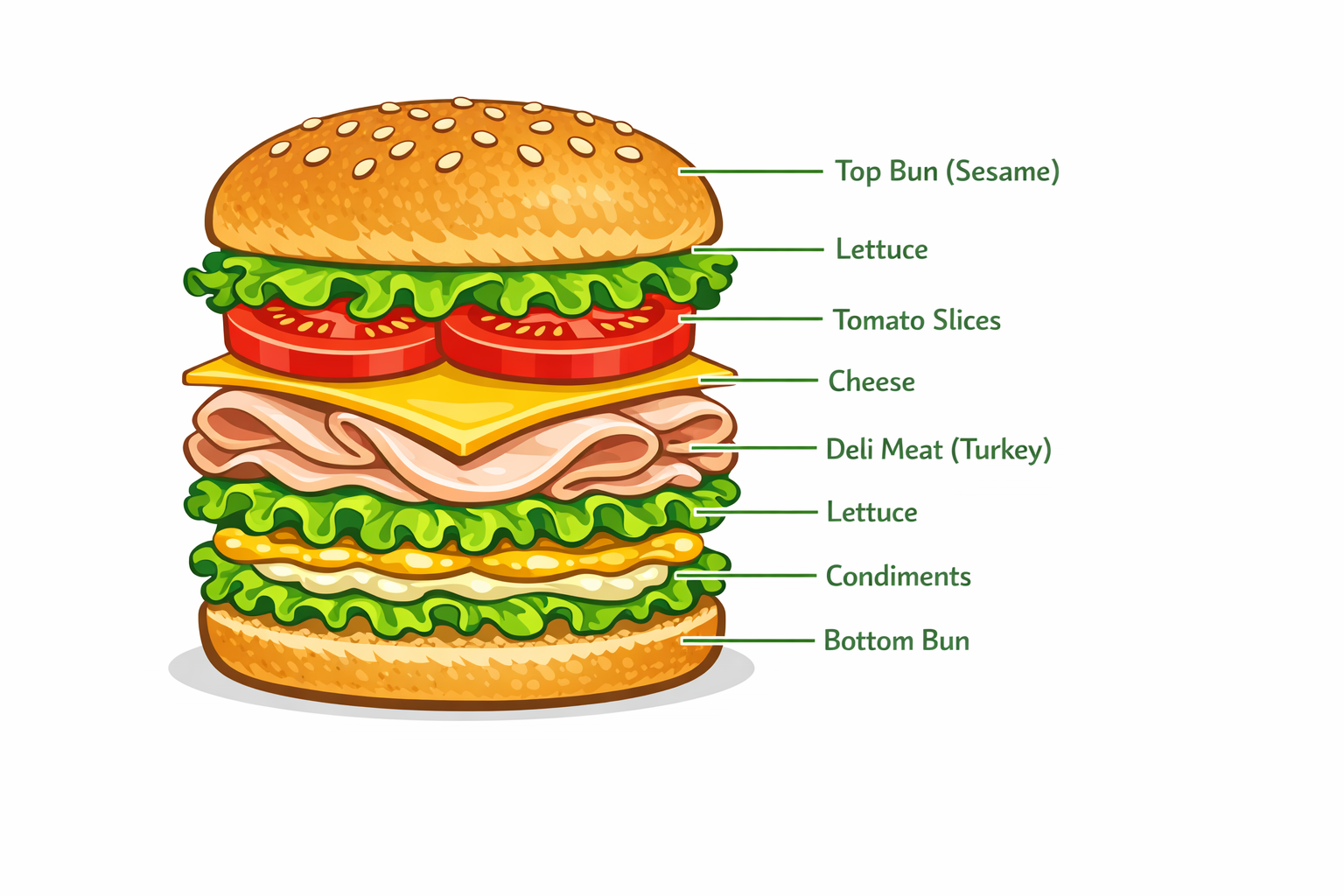
Cutaway diagram of a sandwich showing all labeled layers including bun, lettuce, tomato, cheese, deli meat, condiments, and bottom bun
$26B+ US Delivery Market
3 Core System Stages
5+ Packaging Methods
50 States Covered
Overview

How the Sandwich Delivery System Works

Sandwich delivery in the United States is a multi-layered logistical process that connects kitchen operations, food safety standards, and last-mile transport into one seamless system. This guide breaks down each stage for educational purposes.

Preparation Process

Discover how ingredients are sourced, stored, and assembled using structured kitchen workflows designed for consistency and food safety compliance.

Learn more →

Packaging Methods

Explore the wrapping techniques, insulated containers, and temperature-control systems that keep sandwiches fresh from kitchen to doorstep.

Learn more →

Transport Systems

Understand delivery route planning, dispatch coordination, and the last-mile logistics that define how sandwiches reach customers across the USA.

Learn more →

Visual Reference

Anatomy of a Delivery Sandwich

The diagram below illustrates the structural layers of a standard deli sandwich as understood in the context of preparation and delivery systems across the United States.

Detailed cutaway educational diagram showing all layers of a delivery sandwich: top sesame bun, lettuce, tomato slices, cheese, deli turkey, lettuce, condiments, and bottom bun — each layer labeled with callout lines
Figure 1 — Cross-section diagram of a standard deli sandwich showing all structural layers relevant to preparation and packaging processes.

Educational Note: Understanding the layered structure of a sandwich is fundamental to designing appropriate packaging and maintaining ingredient integrity during transport. Each layer has distinct temperature sensitivity and structural requirements.

System Architecture

The Three Pillars of Sandwich Delivery

Every effective sandwich delivery system in the USA is built on three interconnected stages. A weakness in any one stage affects the quality and reliability of the entire delivery experience.

Kitchen Preparation & Assembly

The delivery process begins in a certified commercial kitchen where ingredients are prepped, portioned, and assembled according to standardized recipes. Proper food handling protocols — including HACCP guidelines — ensure each sandwich is safe and consistent before it ever reaches a package. Workflow design, station layout, and timing all play critical roles in maintaining quality at scale.

Packaging & Temperature Management

Once assembled, sandwiches must be packaged in materials that preserve freshness, prevent contamination, and maintain appropriate temperatures throughout transit. This involves a combination of food-grade wrapping, insulated bags or boxes, and in some cases active cooling or heating elements. Packaging materials must also comply with FDA food contact regulations applicable across all US states.

Logistics, Routing & Last-Mile Delivery

The final stage involves moving packaged sandwiches from the kitchen to the customer's location as quickly and efficiently as possible. This requires route optimization algorithms, real-time dispatch systems, and a network of couriers using bicycles, motor vehicles, or on-foot delivery depending on urban density. The "last mile" — the final leg of the journey — is typically the most logistically complex and cost-intensive portion of the entire system.

At a Glance

Sandwich Delivery Method Comparison

Different delivery configurations are suited to different contexts. The table below summarizes common delivery methods used in the US market.

Delivery Method Typical Range Temperature Control Best For Common In
Bicycle Courier 0.5 – 3 miles Insulated Bag Dense urban cores NYC, Chicago, SF
Motorcycle / Scooter 1 – 5 miles Insulated Box Urban & suburban Most US cities
Car / Van Delivery 2 – 15 miles Thermal Bag Suburban routes Nationwide
On-Foot / Walking Up to 0.5 miles Bag Only Dense pedestrian zones Manhattan, Downtown areas
Automated Locker On-site pickup Temp-Controlled Office buildings, campuses Emerging US market
Disclaimer: This website is an independent informational resource and is not affiliated with any food providers, delivery platforms, or commercial services. No ordering, delivery, or transaction functionality is available on this site. All content is provided for educational purposes only.